
Irregular migration is an alarming reality that calls for a united response. This, as many of our youths continue to dare the vastness of the dangerous seas and the harsh Sahara Deserts at huge human, financial, and material costs to the country.
The recent surge in the number of youths undertaking such perilous adventures and the alarming loss of lives have generated massive responses from the government and ordinary people alike.
Thus the need for this first-ever ‘National Dialogue on Migration’ which brought together key stakeholders, including Mamadou Tangara Gambia’s minister for foreign affairs, Sering Modou Njie, defence Minister, Siaka Sonko, Interior Minister and Abubakarr Suleiman Jeng, National Security Adviser, for a two-day convergence.
Governors, ambassadors, senior government officials, community representatives, and international partners were also in attendance.
The dialogue which is ‘themed on building national consensus on migration interventions’, was organized by the Gambia YMCA and TANGO, in partnership with the International Organisation for Migration and the Ministry of Foreign Affairs, International Cooperation and Gambians Abroad.
The forum provided participants representing various regions and communities mainly along the coastal regions to participate in shaping interventions geared towards addressing the root causes of irregular migration.
Mamadou Tangara, Gambia’s Foreign Affairs Minister, said the dialogue is timely. ‘The urgency of this gathering cannot be overstated. Irregular migration has claimed the lives of many of our young ones, leaving families shattered and communities in mourning.’
The objective of the convergence is to enable all the players to frankly discuss best practices, and challenges and forge a national framework for comprehensive migration intervention which will address the immediate crisis, and cater to the growing demand for youth empowerment.
Migration has been a complex phenomenon influenced by social and economic factors in Gambia. With the advent of smugglers using boats that ventured through the high seas, curbing the menace has been a major challenge for stakeholders.
‘The surge of young people taking the perilous journey has had serious implications on their communities and the country at large.’ Abubakarr Suleiman Jeng, National Security Adviser, said.
‘We remain committed to undertaking all necessary action to provide job opportunities for our young people, intending to address the root causes of irregular migration in the Gambia.’ Jeng added
Musa Camara, Director of Migration and Diaspora Affairs, said the government is working on a series of bilateral agreements geared towards creating more regular pathways to curb this menace.
‘The government through the Foreign Affairs Ministry is on the verge of signing labour agreements with Spain and Italy. We have plans to engage Germany also, which has a labour shortage of over one million’, He said.
Alagie Jarju, the Executive Director of the National Youth Council said as stakeholders, they have implemented so many activities together with their partners, including providing information to ‘thousands of young Gambians on the risk of irregular migration and the opportunities that exist in the Gambia.’
He further called on youths to renew their hopes of making it in the Gambia rather than embarking on the risky journey.
‘To the young person that thinks it is only possible outside of this country, please look within your society, how many Gambians can you see as examples that have not moved beyond the West African Sub Regions and are today successful.’
During the two-day dialogue, participants were divided into seven thematic groups to look into several areas like employment, security, and border management, among others, and also answer questions on the current state of migration, gaps and challenges, and management mechanisms.
During their presentations, the majority holds the belief that irregular migration has been on the rise, and low wages, limited job opportunities, lack of awareness, and peer pressure are among the root causes.
In their resolution, they recommend that the government create more employment opportunities for the youths, with a key focus on investment in technical and vocational education and training. Also, to engage in bilateral labour agreements with European countries to create more regular pathways.
The convergence also recommends more sensitization about the dangers of irregular migration and calls on families and communities to desist from supporting trips, financially or failing to report departures.
Increasing the budget for Youth and Sports was another major cry as the youths constitute over 60% of the Gambia’s population. The 2024 estimated budget for youth and sports is one hundred and twenty-two million, three hundred and ninety-five thousand dalasi.
They also put forward that communities should closely collaborate to campaign against smuggling. Also, they called for a proactive approach to curbing the menace, tasking the government to take the lead role in organising national migration dialogue annually.
These among criminalising smuggling and a host of other resolutions were agreed upon by the gathering and are set for submission to the executive for consideration.
2023 has seen an unprecedented rise in irregular migration, especially through the sea. Foday Gassama, Commissioner for Migration Management at the Gambia Immigration Department, said, within 2023, they have responded to ‘29 cases’ of planned departures across the coastal belts
That number is different from the successful departures that have taken place. Two boats that departed from Kartong in Kombo South, West Coast Region, on the 14 and 19 October 2023, went missing, until recently when reports came out that the boat that left on the 14th capsized in Mauritania sea without a single survival. On board that boat, included 41 youths from Jamburr and 27 from Kartong, among others.
There is still no trace of the boat that departed on 19 October. According to relatives of the would-be migrants on board, the vessel, it carries 147 people, including three pregnant women. 47 of the people on board all hailed from Gunjur in Kombo South, where the trip was organised.
Historically, migration has underpinned economic development and nation-building. Enrich cultures and help civilization to strive. Recently, it has been turning those dreams of some people taking irregular means into tragedies.
Unless a holistic approach is taken and actions spring out from dialogues like this, curbing the menace of trafficking will continue to be a nightmare.
1624 Likes
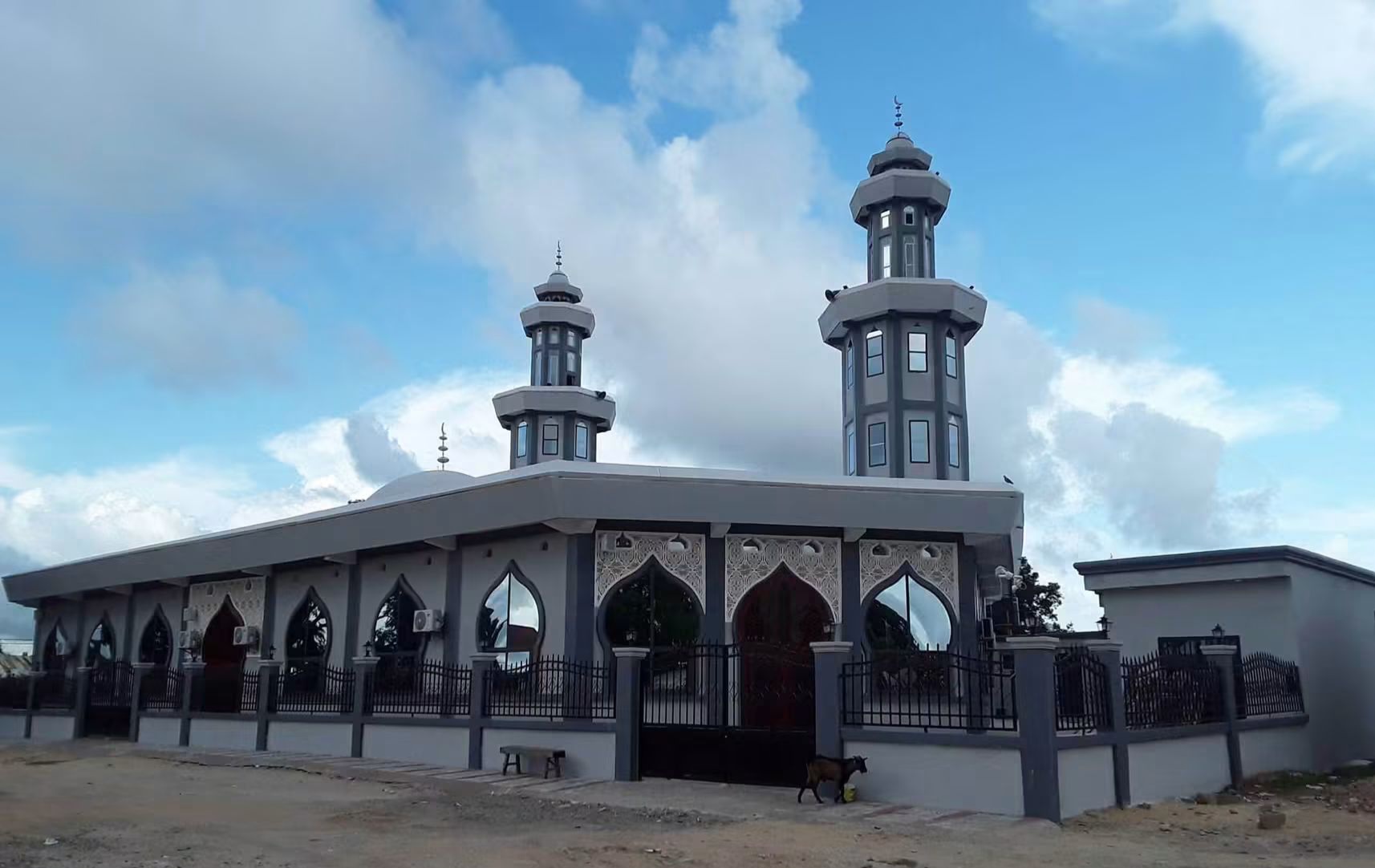
President Adama Barrow on Friday inaugurated a new mosque in Gunjur, a project funded by the Presidency. The ceremony drew cabinet ministers, senior government officials, religious leaders, elders, and residents of Gunjur and neighbouring settlements.On arrival, President Barrow was received by West Coast Region Governor Ousman Bojang and the Minister of Regional Government, Lands and Religious Affairs, Hamat N.K. Bah, along with other dignitaries.(Minister of Regional Government, Lands and Religious Affairs, Hamat N.K. Bah welcoming President Barrow as he arrived in Gunjur.)By noon, the mosque and its compound were filled, with many others seated outside for the historic opening.Imam Alhagie Muhammed Lamin Touray led the prayer service. In his sermon, he preached peace, unity, and stability, and urged Muslims to fulfil their religious obligations with dedication.(Imam Alhagie Muhammed Lamin Touray, who was a former President of The Gambia's Supreme Islamic Council, delivering the sermon.)The Imam then led the two-rakat prayer marking the official inauguration of the mosque.Speaking after prayers, Imam Touray expressed profound gratitude to President Barrow for sponsoring the construction. He recalled past challenges the community faced in raising funds for a mosque, and said the President had fulfilled their long-held dream."This singular act will enhance the spiritual development of the community," Imam Touray said. He also thanked women, youth, and religious leaders for their support during the project.(President Barrow flanked by Chief Falalo Touray and Alkalo Dembo Darboe of Gunjur.)Chief Falalo Touray and Alkalo Dembo Darboe of Gunjur also commended the President. They noted that the mosque, together with ongoing road and infrastructure projects, will promote the religious and social development of Gunjur. They urged residents to support the President to enable him to continue his development agenda.Minister Hamat N.K. Bah described the mosque as one of the most modern in the country, built to meet contemporary architectural standards.He disclosed that President Barrow has funded several mosque projects nationwide, reflecting his commitment to Islam and the spiritual development of Muslims.The Minister echoed calls for Gambians to support the President’s re-election bid in December. He also thanked elders and religious leaders for preaching peace and tolerance, and urged them to continue guiding to preserve national tranquillity.In his inaugural statement, President Barrow thanked the Gunjur community for the honour, noting he had long pledged to support the project.(President Barrow addressing worshippers after the prayer.)He described Gunjur as a historic Islamic settlement that produced renowned scholars including Omar Bun Jeng and Hatab Bojang. He said mosques play a vital role in the spiritual and moral development of society.The President thanked anonymous donors who supported the construction and urged the community to pray for them. He called the mosque a progressive project that has changed the infrastructural landscape of Gunjur.President Barrow challenged residents to take good care of the mosque and its facilities, and pledged government support for its upkeep and maintenance.On the upcoming December elections, the President urged Gambians to pray for peace. He reassured the nation of the government’s commitment to a smooth and credible process."There are no losers in elections," President Barrow said. "A peaceful and credible process promotes The Gambia’s image as a democratic country."The President departed Gunjur to a large farewell crowd.
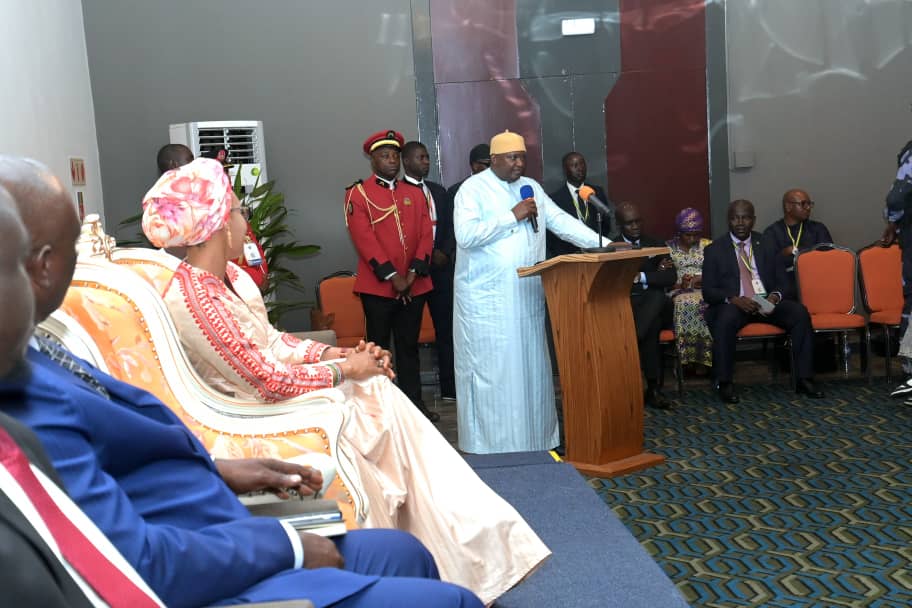
On the sidelines of his visit to the Republic of Gabon, President Adama Barrow on Monday toured landmark projects in the capital, Libreville, and met with members of the Gambian community.The President, accompanied by First Lady Fatou Bah Barrow, began with a visit to a major hotel constructed by a Turkish conglomerate that has helped transform Gabon’s hospitality industry.The Chief Executive Officer conducted President Barrow and the First Lady on a guided tour of the hotel located on the shores of the coastal city.President Barrow was then driven to the site of one of Gabon and Central Africa’s most ambitious projects — a twisting tower that, when completed, will be the tallest building in the sub-region.Gabonese and Turkish contractors briefed the President on the progress of the tower and related infrastructure. The project is expected to be ready for inauguration next year and will permanently transform the skyline of the Central African nation. The gesture mirrored the tour accorded to President Brice Clotaire Oligui Nguema during his recent visit to The Gambia.Following the site visit, President Barrow and the First Lady proceeded to the Radisson Blu Hotel for a meeting with Gambians living in Gabon.Consul General Saikou Dukureh welcomed the President and thanked him for the engagement. He described Gambians in Gabon as hardworking, united, and law-abiding, and commended the government for supporting their welfare.Jakarta Dampha, a community representative, said there has been marked improvement in the well-being of Gambians in Gabon since President Barrow took office. He noted that the President’s leadership has ensured that Gambians in the diaspora are not discriminated against and that their concerns are addressed promptly.Hawa Dukureh, speaking on behalf of the youth, commended the President for dispatching a team of immigration officials to issue national documents. She said nearly 200 people were processed, but appealed for support to ensure the passports are delivered.In his remarks, President Barrow expressed gratitude for the warm reception at the airport, which he said even impressed his host, President Oligui Nguema.He said dialogue is key to national unity and described it as a great honour to serve as Chief Guest of Honour at Gabon’s Independence Anniversary.On diaspora support, the President reaffirmed his government’s commitment to assisting Gambians abroad. He said the decision to send immigration officials to Gabon was to ensure citizens have access to documents. He pledged to prioritise the delivery of all processed passports upon his return to Banjul.The President also updated the community on developments at home. He said the government has laid the foundation stone for 1,500 km of roads across the country and highlighted progress in electricity, health, transport, and education.With the December presidential election approaching, President Barrow encouraged those with voter cards to exercise their right, and urged those without to encourage family and friends to vote for continuity.He concluded by urging the community to maintain unity, peace, and respect for lawful authority. He also advised Gambians seeking repatriation to apply through the Ministry of Foreign Affairs for a smooth process.
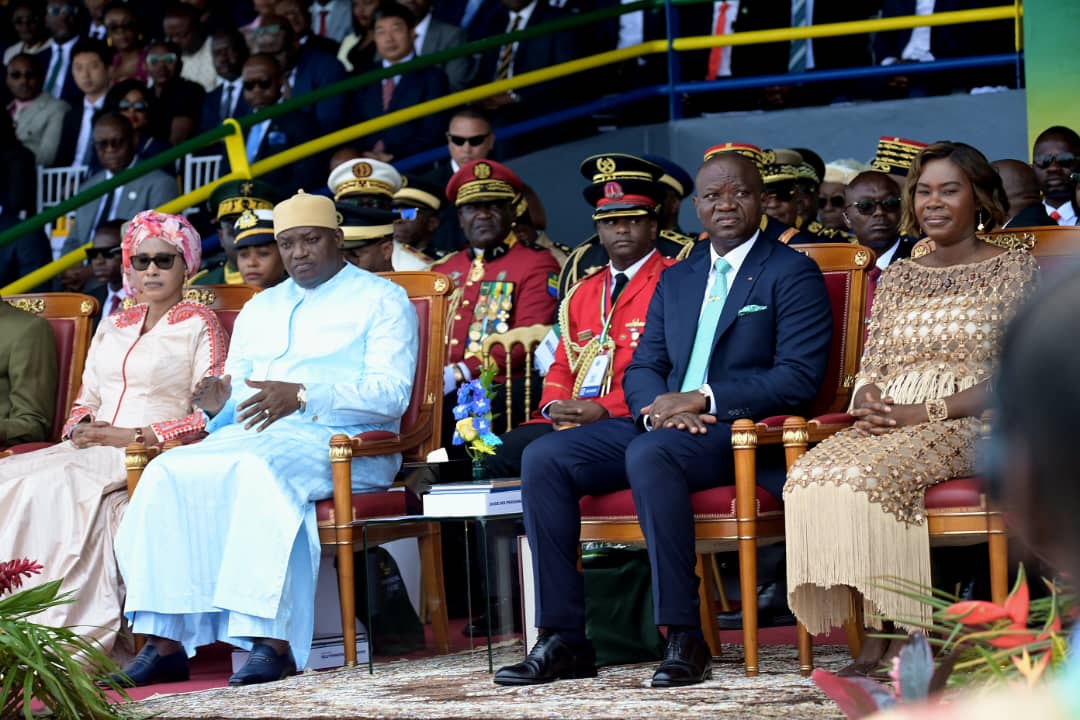
The President, His Excellency Adama Barrow, joined the people of Gabon on Monday to celebrate the country’s 66th Independence Anniversary with a grand military parade in the capital, Libreville.The national day celebrations were held at the Palais de l’Indépendance in central Libreville. President Barrow, accompanied by First Lady Fatou Bah Barrow, served as Chief Guest of Honour.The ceremony was attended by several African leaders, including Félix Antoine Tshisekedi Tshilombo, President of the Democratic Republic of Congo, Carlos Vila Nova, President of the Democratic Republic of São Tomé and Príncipe, and General Horta Nta, Interim President of Guinea-Bissau.Gabonese President Gen. Brice Clotaire Oligui Nguema, Commander-in-Chief of the Armed Forces, presided over the official celebrations.Ahead of the parade, President Oligui Nguema inaugurated La Concorde, a memorial dedicated to Georges Damas Aleka, composer of Gabon’s national anthem. A representative of Aleka’s family received a posthumous award in honour of his contribution as one of the architects of modern Gabon.The main highlight was a parade by the armed and security services. Detachments from the Army, Navy, Air Force, Special Operations Forces, and Commandos marched past the Commander-in-Chief.Units of the Police also participated, including General Services, the Special Intervention Group, Riot Control, and the K-9 Unit. The Fire Service, Ambulance Service, and Medical Corps also took part.The second phase featured a display of military hardware. Dozens of armoured personnel carriers, rocket launchers, artillery, and anti-aircraft guns rolled through the boulevard, while military aircraft and helicopters conducted a flypast overhead.Service vehicles operated by the Armed Forces, Police, Paramilitary, and Engineering Corps were also displayed, marking the end of the parade.Following the ceremony, President Barrow and First Lady Fatou Bah Barrow were driven to the Presidential Palace for a reception hosted by President Oligui Nguema and First Lady Zita Oligui Nguema.
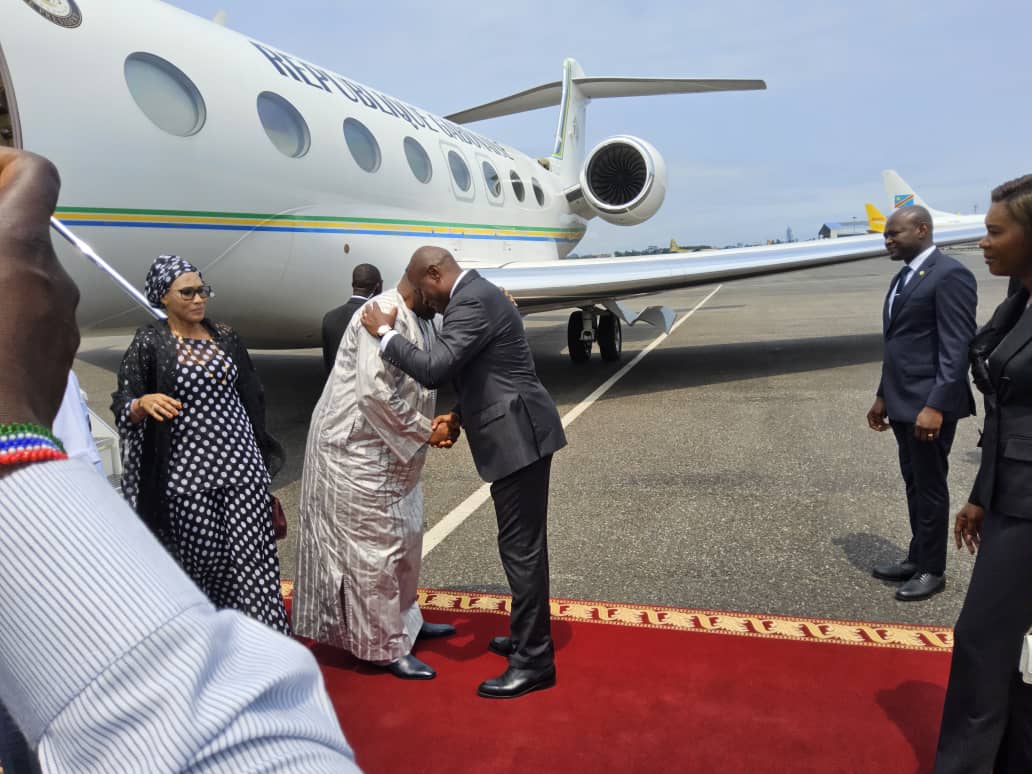
President Adama Barrow, accompanied by First Lady Fatou Bah Barrow, arrived in Libreville on Sunday to attend Gabon’s 66th Independence Anniversary celebrations.President Barrow is among five African leaders invited to the ceremony scheduled for Monday at the Palais de l’Indépendance.The Gambian delegation landed at Léon Mba International Airport in the afternoon, where they were received by Gabonese President Gen. Brice Clotaire Oligui Nguema and First Lady Zita Nguema.The two heads of state took national salutes before President Barrow reviewed a guard of honour mounted by a detachment of the Gabonese Armed Forces.Outside the VIP lounge, members of the Gambian community in Gabon gathered to welcome the President, waving flags and chanting slogans.From the airport, President Barrow and the First Lady visited the mausoleum of Gabon’s first President and founder of modern Gabon, Léon Mba, in central Libreville.They laid a wreath at the tomb and offered prayers. President Mba led Gabon from independence in 1960 until his death in 1967, and remains a revered figure in the country.The mausoleum also houses a museum displaying the late President’s personal effects and official documents from his tenure.After touring the museum and signing the visitor’s book, the President and First Lady proceeded to the Presidential Palace.At the Palace, President Barrow held a brief closed-door meeting with President Oligui Nguema. Also in attendance were the Transitional President of Guinea-Bissau, Gen. Horta Nta, and President Félix Antoine Tshisekedi Tshilombo of the Democratic Republic of Congo.Later in the afternoon, the leaders took part in the inauguration of Gabon’s new Ministry of Foreign Affairs building. The complex has been named after former AU Chairperson and Gabonese statesman Jean Ping, in recognition of his service to the nation.President Oligui Nguema cut the ribbon to officially open the facility before guiding dignitaries on a tour of the building.Following the ceremony, President Barrow and the First Lady returned to the official guest villa.
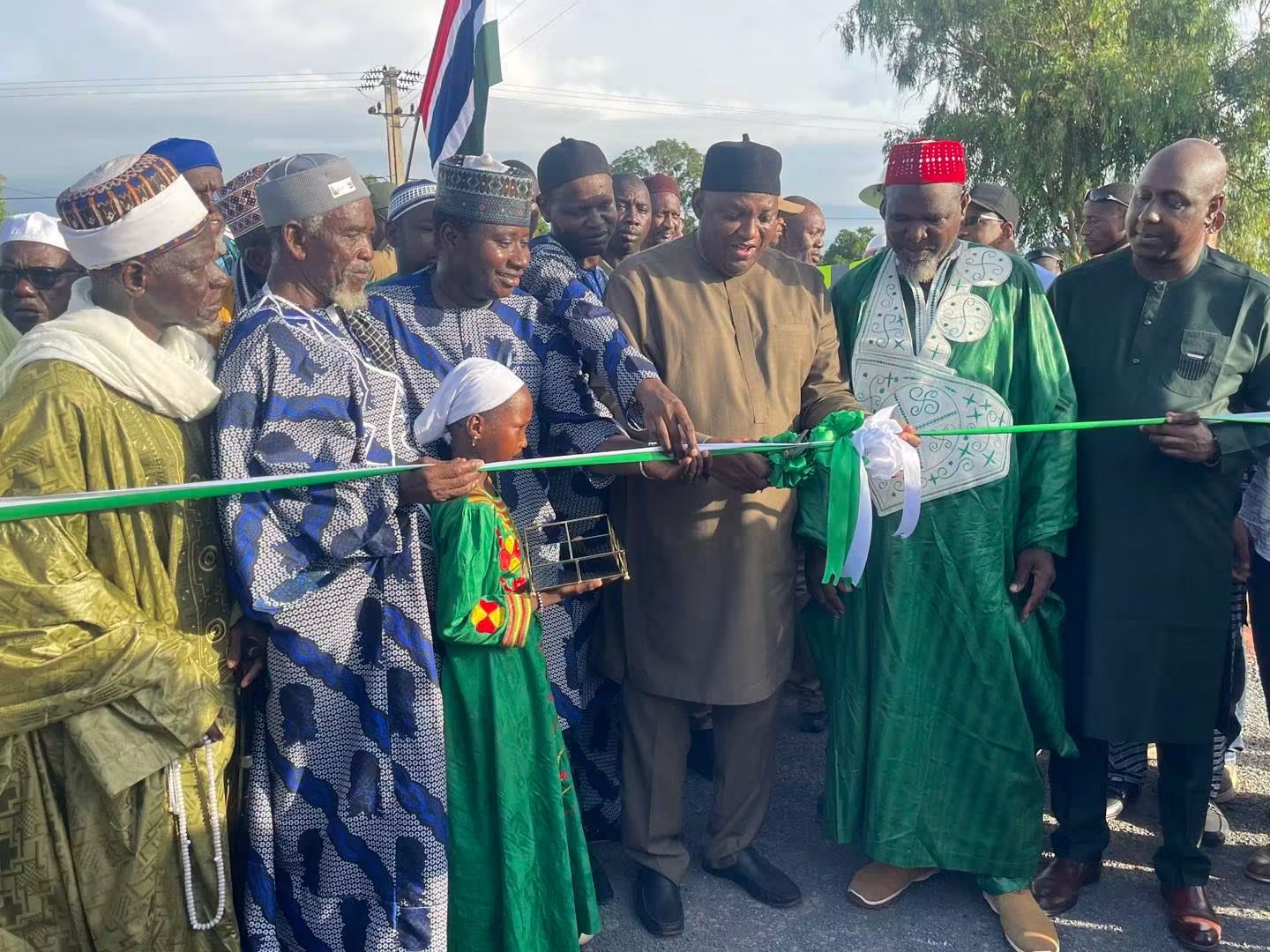
President Adama Barrow continues his week-long development tour with the inauguration of key infrastructure and health projects in CRR North.The President also presented an ambulance to the community of Ballanghar Jaloto.President Barrow was seen off at Farafenni by a ceremonial guard from the 2nd Infantry Battalion of The Gambia Armed Forces before proceeding to Yalal Tankonjala.In Yalal, he laid the foundation stone for a new road connecting Yalal to inland communities. The road is expected to improve access and connectivity for residents.From Yalal, the President inspected the ongoing construction of an agro-logistics centre at Maka Farafenni on the main highway. The centre is jointly funded by the Government of The Gambia and the World Bank.When completed, the facility will include training, logistics, and food processing units, in line with the Ministry of Agriculture’s long-term plan for sustainable agricultural development.The President then returned to Farafenni to lay the foundation stone for the Farafenni Roads Project. The initiative aims to transform Farafenni into a major sub-regional trade and transit hub due to its strategic location on the Senegambia trade and transport corridor.The event was met with celebrations by residents.The President continued north to Ballanghar, where he was welcomed by large crowds. At the local health post, he presented an ambulance to the community.Residents celebrated the handover, describing it as a major step forward in healthcare delivery for the area.In Upper Saloum, President Barrow inaugurated the Njau, Bati-Gui Jahanka loop road. The road completes the North Bank road project, which runs from Kerr Gibbi in Upper Saloum to Nyanga Bantang in Niani District via Nianija.In Nianija, the President also inaugurated a new health post in Buduk — the first of its kind in the community.Minister of Health Dr Ahmadou Lamin Samateh described the facility as “another significant milestone”, reflecting the government’s commitment to improving healthcare services.President Barrow said the opening aligns with his administration’s broader goal of ensuring access to quality healthcare for all Gambians.For residents of Buduk and surrounding villages, the new health post will provide primary care for women and children and reduce pressure on the nearest health centre in Chamen.
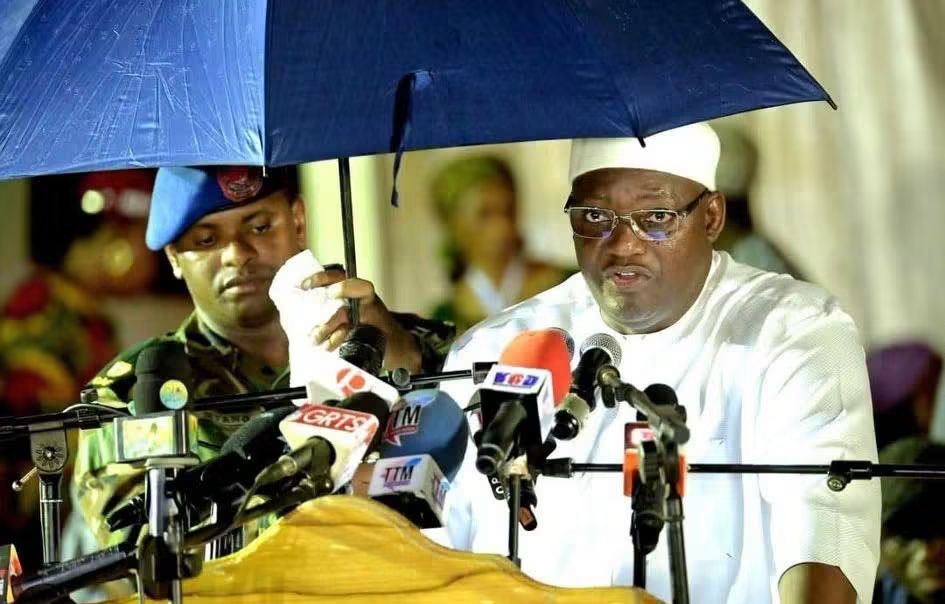
President Adama Barrow on Saturday departed Banjul for a week-long tour of the country to launch, inaugurate, and lay foundation stones for key projects in infrastructure, health, and agriculture.The President is accompanied by a high-powered delegation of Cabinet ministers, technocrats, and supporters. The tour will take him to all regions of the country as part of his administration’s commitment to bring development closer to citizens.President Barrow was seen off at the Banjul Ferry Terminal by Vice President Mohammed B.S. Jallow, Cabinet ministers, heads of security services, and supporters. A guard of honour mounted by the Naval Fleet and the Army Battalion welcomed the Commander-in-Chief before he boarded the ferry to cross to Barra.Speaking on board, President Barrow said the tour reflects his government’s strategy of delivering social projects directly to ordinary Gambians.“Infrastructure is the foundation upon which all other sectors rely,” the President said, describing it as a key pillar of his development agenda.Upon arrival in Barra, the President was received by North Bank Region Governor Lamin Saidykhan, security chiefs, NPP regional executives, and members of the Gambia Democratic Congress who recently joined the NPP-led National People's Alliance.Outside the terminal, hundreds of supporters lined the streets to welcome the President.President Barrow laid the foundation stone for the Essau-Barra Back Way Road. He then travelled to Fass Njaga Choi to launch construction of an 8.5km road linking Madina Manneh, Samba Johen, and Ndungu Chareh.Communities expressed joy over the projects, saying the new roads will open access to markets and improve delivery of social services such as schools and health facilities.Similar scenes were witnessed in Kerr Samba Kalla, Upper Niumi, where the President laid the foundation stone for another 8.5km road connecting Ndungu Charreh, Lang Sarr, Malick Sarr, and Samba Yassin.The delegation later made a stop in Bakalar via the newly inaugurated Hakalang Road, where President Barrow laid the foundation stone for a 15km road to Pakela Demba Solleh, Sare Mama, and Sare Bajonkoto.The President’s tour continues across the country this week.
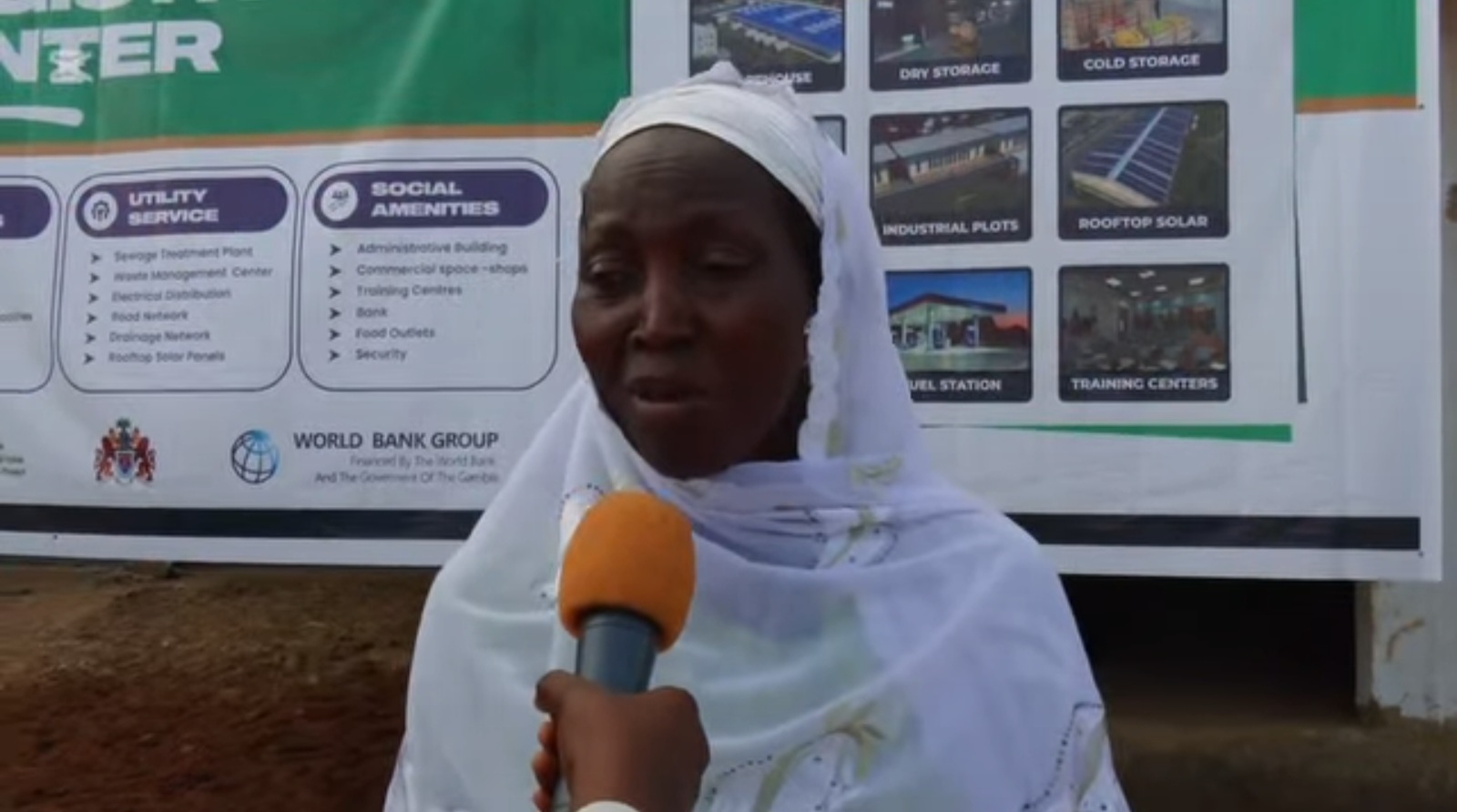
Communities in Lower Niumi, Upper Niumi, and Jokadu have welcomed new road projects launched by President Adama Barrow on Saturday as part of his nationwide development tour.In Fass Njaga Choi, the President laid the foundation stone for an 8.5km road linking Madina Manneh, Samba Johen, and Ndungu Chareh.Residents expressed joy and appreciation, saying the project fulfils a long-held community need.“This road has been our dream for years. We thank the President for remembering us,” one resident said.On the newly completed Hakalang Road, the President also launched the construction of a 15km feeder road in Bakalar. The road will connect Pakela Demba Solleh, Sare Mama, and Sare Bajonkoto.Alhaji Kala Darboe said the new road will create opportunities for women and farmers, while improving access to education, healthcare, and other essential services.The latest launches underscore the government’s renewed push to expand the country’s road network and bring development closer to rural communities.For residents of the North Bank Region, the projects represent tangible progress and renewed hope for improved livelihoods.President Barrow’s tour continues across the country this week.
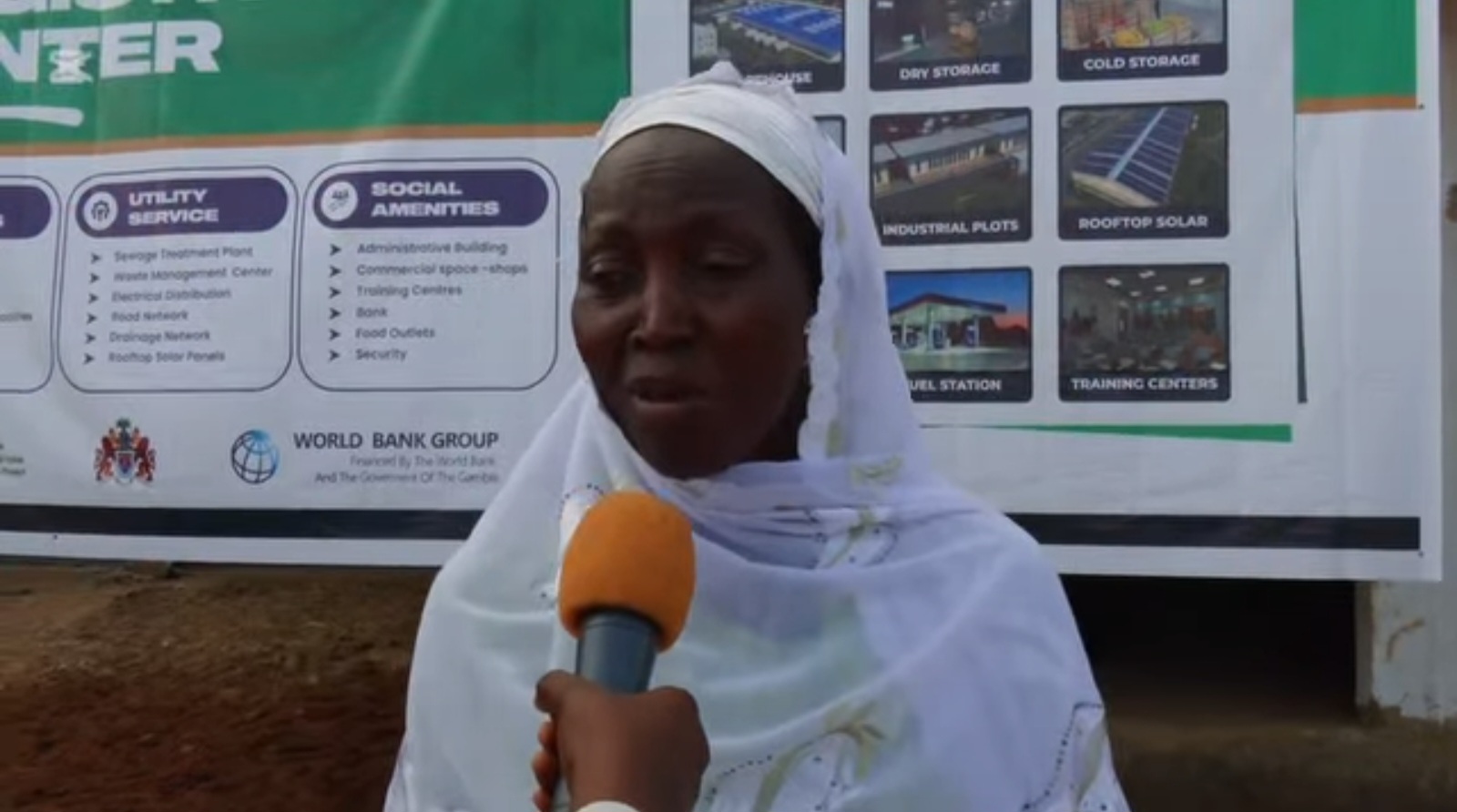
Communities in Lower Niumi, Upper Niumi, and Jokadu have welcomed new road projects launched by President Adama Barrow on Saturday as part of his nationwide development tour.In Fass Njaga Choi, the President laid the foundation stone for an 8.5km road linking Madina Manneh, Samba Johen, and Ndungu Chareh.Residents expressed joy and appreciation, saying the project fulfils a long-held community need.“This road has been our dream for years. We thank the President for remembering us,” one resident said.On the newly completed Hakalang Road, the President also launched the construction of a 15km feeder road in Bakalar. The road will connect Pakela Demba Solleh, Sare Mama, and Sare Bajonkoto.Alhaji Kala Darboe said the new road will create opportunities for women and farmers, while improving access to education, healthcare, and other essential services.The latest launches underscore the government’s renewed push to expand the country’s road network and bring development closer to rural communities.For residents of the North Bank Region, the projects represent tangible progress and renewed hope for improved livelihoods.President Barrow’s tour continues across the country this week.
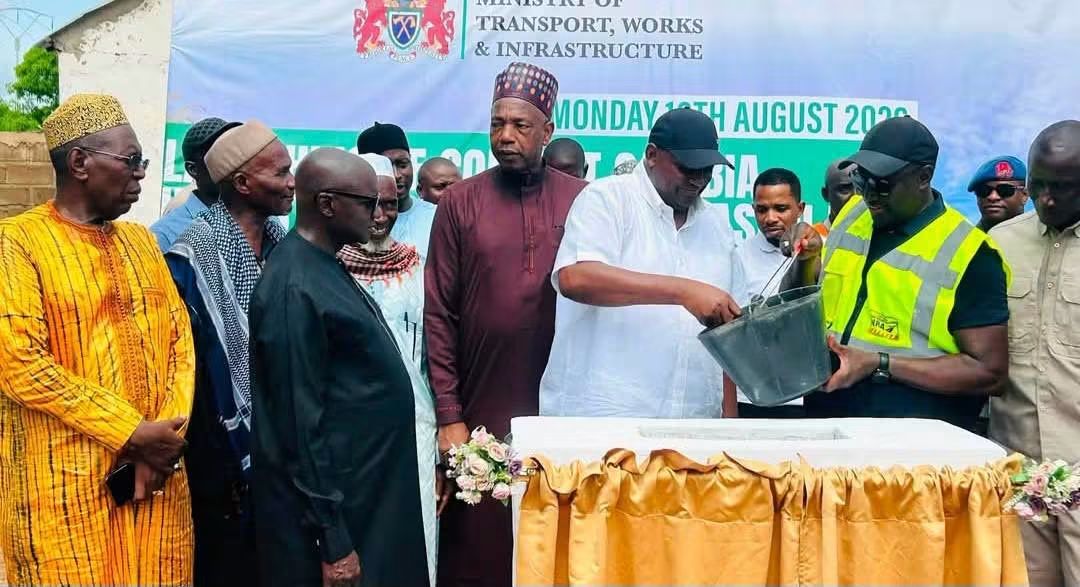
President Adama Barrow on day three of his nationwide development tour inaugurated the 17km Salikenni–Banni–Njaba Kunda road amidst celebrations by local communities.The inauguration ceremony was held in Njaba Kunda. The President also laid foundation stones for new road projects in Barra and Daru Rilwan.Later, President Barrow addressed a large gathering in Njaba Kunda attended by residents of Upper Badibou.Speakers at the meeting thanked the President for investments in roads, health care, and agriculture in the region.North Bank Region Governor Lamin Saidykhan commended the government for what he described as unprecedented development that has transformed livelihoods in the area. He urged residents to reflect on the impact of these projects on ordinary people.The National Assembly Member for the area described the gathering as significant, noting ongoing support for the President in Badibou. He attributed this to the government’s track record of delivering roads and health centres, adding that previous administrations had failed to construct the road despite strong local support.Alhaji Jagne, Chief of Central Badibou, and Councillor Maimuna Bah expressed gratitude to the President. They recalled past difficulties accessing health facilities due to poor roads, and said patients can now reach care within minutes thanks to the new road, health centre, and provision of ambulances.Minister of Gender and Children’s Welfare, Fatou Kinteh, said President Barrow’s development agenda is visible across all sectors, particularly in women’s empowerment. She noted that women now hold influential positions in government and called on women to support the President, adding that Gambian women have pledged to contribute to his nomination fees in December.Managing Director of the National Roads Authority, Sulayman Sumareh, disclosed that the Salikenni–Njaba Kunda road is fully government-funded. He said the project will improve connectivity and enhance access to health, education, and other social services.In his address, President Barrow described the new road as part of his government’s plan to connect all communities across the country. “The North Bank Region has received unprecedented attention under this government with the construction of several roads,” the President said.He reassured citizens of his administration’s commitment to infrastructure and urged communities to take ownership and maintain the projects to serve their intended purpose.
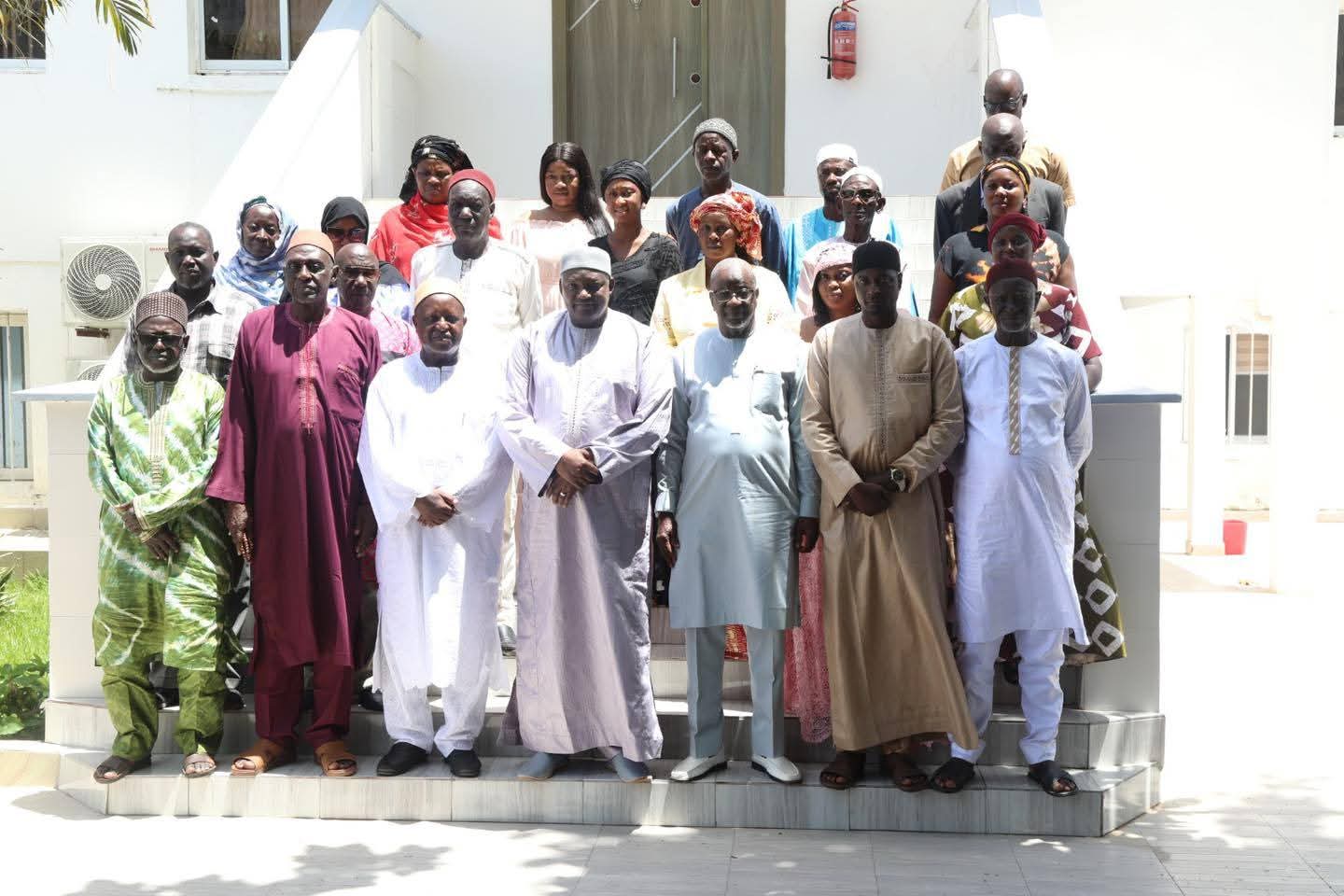
Prominent executive members of the People’s Progressive Party, PPP, led by former party leader Kebba Jallow, on Wednesday formally endorsed President His Excellency Adama Barrow and the National People’s Party, NPP-led Alliance, at State House.The delegation pledged to support the President’s candidature and work to ensure victory in the December 5th presidential election.Speaking to GRTS after the endorsement, Mr Jallow reaffirmed his support for President Barrow, saying the President has done so much for the country and deserves another term in office.Deputy Public Relations Officer of the NPP, Honourable Seedy S.K. Njie, welcomed the PPP executives into the Alliance. He said President Barrow is pleased to accept the endorsement.The PPP becomes the latest political party to throw its weight behind President Barrow, barely four months to the presidential election.President Barrow Meets GK Partners CEOIn a separate engagement, President Barrow also received in audience Mr Gibril Faal, Chief Executive Officer of GK Partners.Mr Faal briefed the President on the activities of GK Partners, particularly its ongoing Diaspora Fellowship project being implemented jointly with the International Organisation for Migration, IOM.He also updated the President on strides made in diaspora direct investment, noting that The Gambia now leads in monitoring remittance data through the Central Bank of The Gambia.President Barrow underscored his commitment to supporting the project and urged GK Partners to do more public relations work to inform Gambians about their initiatives.


Leave A Comment
Your email address will not be published. Required fields are marked *